
 Isabelle


Who Here Hasn’t Had To Deal With Their Child Being Intimidated or Bullied at School? But, What Can You Do When A Teacher Becomes A Bully?
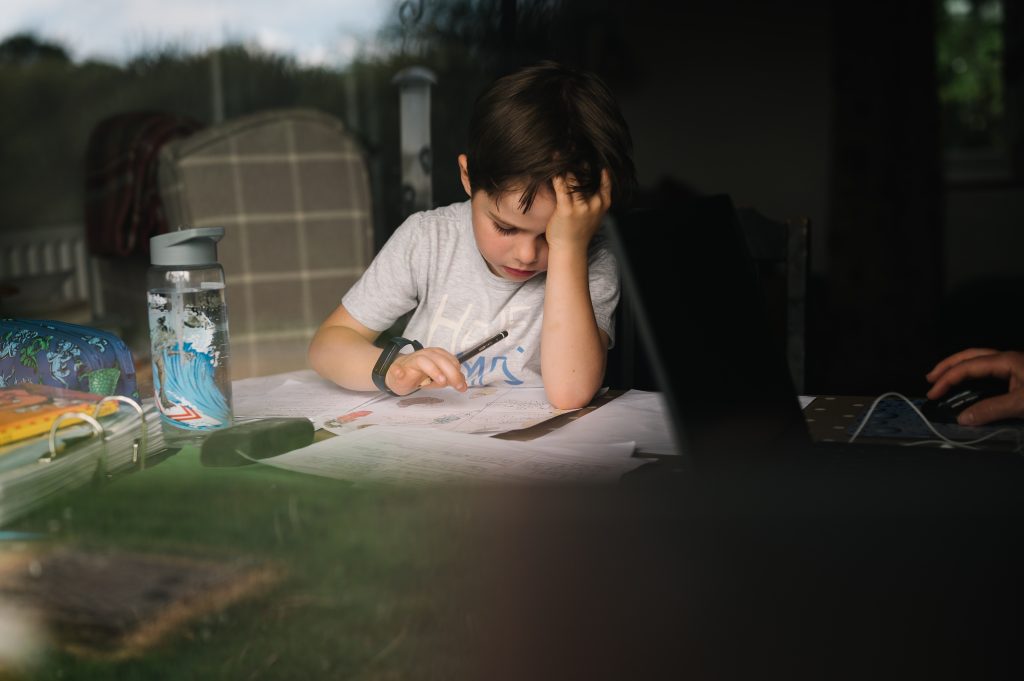
As you probably know by now, my eldest son has been diagnosed with ADHD, severe aggressiveness, and low impulse control when he was almost 4 years of age.
As my son grew up, he got into more and more sports. The sports helped him a lot with his aggressiveness, but his impulse control still needed help, and he was having issues in class. A Bully was showing up, where I least expected it to be.
Can A Teacher Be A Bully?
In fourth grade, I noticed (and so did his teacher), that my son’s writing still looked like a kindergartner’s handwriting. I knew he was trying hard, but the teacher thought he was putting no effort into it.
I saw all the efforts he was putting in. She didn’t take the time to look.
He would also get frustrated when he tried to write, and often complained that his hands would hurt after writing something. I felt bad for him, especially when his teacher would give him 0 on his homework, simply because the writing was really bad. The worst part is that he had so many of the answers correct; my son was getting more and more discouraged.
I often talked to the teacher about changing her method and I would always get the same answer:
“If he won’t put in the effort to write correctly, then I won’t correct it, ZERO!“
A real Bully!
This teacher was being a bully; she was unsupportive and refused to adapt her teaching methods to accommodate a child with disabilities; insisting that it was the child fault. This was wrong on so many levels. I complained to the principal, but she had her teachers back on this.
I didn’t know how to help my son.
Finally, Evaluation and Diagnosis
During that summer, my eldest was tested properly by a neuropsychologist in a specialized clinic. They did so many tests there. Mental tests, physical tests, everything from reading sentences, to dribbling a ball, and drawing on a line. All these tests took 3 different appointments of 4 to 5 hours each.
But by the end, we had the results. Confirmation of what we had prior, ADHD, plus 2 more diagnoses.
Dyspraxia, which is a condition affecting physical coordination. More specifically, children have a much harder time learning how to tie their shoe laces, holding their forks and knives properly, and yes — writing.
and
Dyslexia – dysorthographia, which is a specific learning disability that affects reading and writing.
Not only did my child have ADHD and trouble concentrating in class, he also had to contend with Dyspraxia, Dyslexia, and Dysorthographia. This means my son will NEVER be able to write properly like you and me. He will NEVER be able to write cursive elegantly or excel in calligraphy. Heck, having a buttoned-up shirt is a type of punishment for him..!
All he needed was his teacher’s compassion and help, instead of being given zeroes (despite having the correct answers), because his handwriting wasn’t up to the teacher’s standards.
Special accommodations
This meant that my son needed special accommodations in class to help him. These included a laptop to write (instead of focusing on handwriting), as well as a headset to help him dictate his texts and help him concentrate (instead of being distracted by ambient noises).
Dyspraxia made writing with a pen or pencil extremely difficult and painful for him. To help him practice, the specialist told us to get him some LEGO to play with. Haha, I love this, he already loves them. Now he has an excuse to have more!
Honestly, I would just love to go see his old teacher, the one that would give him zeros and shove the diagnostics in her face, and get some sort of apology for my son. I believe she was simply “old school” and didn’t understand that certain children needed more help than others (I hope so anyway).
Bullies can appear in all sorts of sizes and forms. When you have a feeling that something isn’t quite right, or might be wrong, push to get more answers.
If your children are presenting some difficulties in certain fields in school, it would be very important to get them evaluated as soon as possible. You never know what can be lurking underneath waiting to be discovered. And in the long run, your child will benefit from the accommodations that will help him or her overcome their learning difficulties.
Here are some reading suggestions:
Suggested Readings on
Dyspraxia, Dyslexia, and Dysorthography:
Gut and Psychology Syndrome: Natural Treatment for Autism, Dyspraxia, A.D.D., Dyslexia, A.D.H.D., Depression, Schizophrenia, 2nd Edition


Dyspraxia: The Hidden Handicap


Overcoming Dyslexia (2020 Edition): Second Edition, Completely Revised and Updated


La dyslexie et la dysorthographie racontées aux enfants (French)


Dyslexie et Dysorthographie – La boîte à outils: Annie Tessier, orthopédagogue et Priska Poirier, enseignante (French Edition)