
 Isabelle


What are they? Why do they happen? How do we deal with them?
How to prevent them and help our little one?

Image © Başar Türk – Scop.io – July 4, 2016
Oh, that awful word! Tantrum!
Let me tell you.
# 1, BREATHE !!!!!!!!! haha
What are tantrums?
Tantrums come in all shapes and sizes.
They can involve spectacular explosions of anger, frustration and disorganized behavior – when your child ‘loses it’.
You might see them crying, screaming, stiffening limbs, arching their backs, kicking, falling down, flailing about, or running away. In some cases, children hold their breath, vomit, break things or get aggressive as part of a tantrum.
YEAH, I KNOW!! OMG, BUT JUST BREATHE. I’ll be repeating this a lot.
Why do Tantrums Happen?
Tantrums are very common in children aged 1-3 years.
This is because children’s social and emotional skills are only just starting to develop at this age. Children often don’t have the words to express big emotions. They might be testing out their growing independence. And they’re discovering that the way they behave can influence the way other people behave. I scream, you react!
So, tantrums are one of the ways that young children express and manage feelings, and it is also a learning opportunity to help them understand their feelings and deal with change.
Older children can have tantrums too. This can be because they haven’t learned more appropriate ways to express or manage feelings yet.
For both toddlers and older children, there are things that can make tantrums more likely to happen:
- Temperament – this influences how quickly and strongly children react to things like frustrating events. Children who get upset easily might be more likely to have tantrums.
- Stress, hunger, tiredness, and over-stimulation – can make it harder for children to express and manage feelings and behavior.
- Situations that children just can’t cope with – for example, a toddler might have trouble coping if an older child takes a toy away.
- Strong emotions – worry, fear, shame, and anger can be overwhelming for children.
Are you still breathing? Good!
What you need to remember is that tantrums are a normal part of self-development and recognition of one’s own emotions. It’s NORMAL!
How to Make Toddler Tantrums
Less Likely to Happen
There are certain things you can do to prevent tantrums:
- Stress, tiredness, hunger, and overstimulated children are more likely to experience tantrums: do fewer trips if you can with your child, bring snacks, have entertainment such as small toys to distract your child if the errant is going to take extra time.
- Tune in to your child’s feelings. If you’re aware of your child’s feelings, you might be able to sense when big feelings are on the way. You can talk about what’s going on and help your child manage difficult feelings. You might also be able to distract your child. Hugging your child and speaking in a calm voice always helps. Screaming over the noise will always worsen the situation!!!
- Identify tantrum triggers. For example, your child might have tantrums when you’re shopping. You might be able to plan for this situation or change the environment to avoid tantrums. For example, it might help to go shopping after your child has had a nap and a snack and ask if your child wants to be your little helper.
- Talk about emotions with your child. When your child struggles with a strong feeling, encourage your child to name the feeling and what caused it. For example, ‘Did you throw your toy because you were angry that it wasn’t working? What else could you have done?’
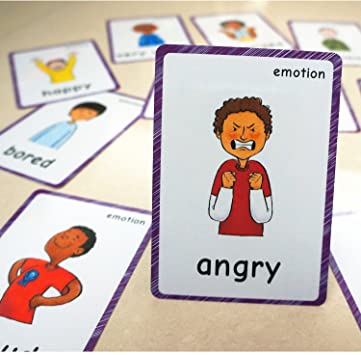
You can also use cards with faces showing different emotions such as happy, sad, angry and explain the difference.
When a situation presents itself, you can use these cards and say, oh I see you were angry and did this action…. And show the angry face card. This will help your child identify the emotion they are feeling. For younger children, these cards are very useful in these situations.
Here are the cards I use with my children. We bought them on Amazon (Affiliate Content Disclosure):
How to Handle Toddler Tantrums When They Happen
Sometimes tantrums happen, no matter what you do to avoid them.
Here are some ideas for handling tantrums when they happen:
- Stay calm (or pretend to) and BREATHE! Take a moment for yourself if you need to. If you get angry, it’ll make the situation harder for both you and your child. When you speak, keep your voice calm and level, and act deliberately and slowly.
- Acknowledge your child’s strong feelings. For example, ‘It’s very upsetting when your ice cream falls out of the cone, isn’t it?’ This can help prevent the behavior from getting more out of control and gives your child a chance to reset emotions.
- Wait out the tantrum. I don’t know how many times I’ve repeated myself, WAIT IT OUT! Stay close, so your child knows you’re there. But don’t try to reason with your child or distract them. It’s too late once a tantrum has started. (imagine a volcano, once it’s started to explode, you have to wait it out)
- Take charge when you need to. If the tantrum happens because your child wants something, don’t give your child what they want. DO NOT GIVE IN! If your child doesn’t want to do something, use your judgment. For example, if your child doesn’t want to get out of the bath, pulling out the plug might be safer than lifting out your child. Make sure your child is safe! Even if it’s on a dirty floor, as long as your child can’t hurt themselves, it doesn’t matter. Clothes can be washed.
- Be consistent and calm in your approach. If you sometimes give your child what they want when they have tantrums and you sometimes don’t, the problem could get worse.
- Once the tantrum is over, give your child a hug, speak calmly to your child about what happened. Talk about the emotions. It’s important that your child understands the emotions they lived and parents try to figure out how to prevent this from happening again. Talk to your child about why it happened and how can we change things in the future.
DO NOT REPRIMAND YOUR CHILDREN FOR HAVING STRONG EMOTIONS!
Help Them Identify and Manage Their Feelings Instead
Tantrums in Preschoolers
and Early School-aged Children

Yes, it can still happen at those ages
You can use all of the tips above to help with tantrums in preschoolers and early school-age children.
At this age, children are also better equipped to understand that their actions have consequences. This means that you can sometimes use the consequences to manage your child’s behavior.
It’s important to make sure you don’t accidentally reward tantrums.
picture © Anita Marenze Iversen – Scop.io – Undated
For example, if your child has a tantrum because you say no to buying a lolly-pop, but you then buy the lolly-pop, this rewards the tantrum. Shouting or pleading with your child when they have tantrums can also be a reward because it gives your child attention. If you say no, it means NO!
Coping with Tantrums
Dealing with tantrums can be very draining and stressful. You might feel you need to step in to end a tantrum straight away. But if it’s safe to do so, it can help to take a breather while you decide how to respond.
Here are some ideas for staying calm and keeping things in perspective:

- Develop a strategy for tantrums. Have a clear plan for how you’ll handle a tantrum in whatever situation you’re in. Concentrate on putting your plan into action when the tantrum happens.
- Accept that you can’t control your child’s emotions or behavior all the time. You can only keep your child safe and guide their behavior, so tantrums are less likely to happen in the future.
© BillionPhotos.com – Adobe Stock
- Accept that it takes time for change. Your child has a lot of growing up to do before tantrums are gone forever. Developing and practicing self-regulation skills is a life-long task.
- Beware (and be aware) of this train of thinking: That your child is doing it on purpose. They are not! They are not trying to upset you either. Children don’t have tantrums deliberately – they’re stuck in a bad habit or just don’t have the skills right now to cope with the situation.
- Keep your sense of humor. But don’t laugh at the tantrum – if you do, it might reward your child with attention. It might also upset your child even more if they think you’re laughing at them.
- If other people give you dirty looks, ignore them. They’ve either never had children or it’s been so long since they had a young child, and have forgotten what it’s like. This is a normal part of development.
Simply breathe! (I said, I’d be stating this a lot!!)
Now, this is where it gets challenging.
What if my child becomes destructive or dangerous?
If a tantrum escalates, remove your child from the situation and enforce a timeout:
This also means, you’ll be getting a workout.
- Select a timeout spot. Seat your child in a boring place, such as in a chair in the living room or on the floor in the hallway, or even on the bed. Wait for your child to calm down. Consider giving one minute of timeout for every year of your child’s age. Ex, your child is two years old so, the timeout will be 2 minutes long.
- Stick with it. If your child begins to wander around before the timeout is over, return him or her to the designated timeout spot. Don’t respond to anything your child says while he or she is in timeout. And start the time over.
- Know when to end the timeout. When your child has calmed down, briefly discuss the reason for the timeout and why the behavior was inappropriate. Give a hug and ask your child to apologize for the behavior. Then return to your usual activities.
- If your child is reluctant to go into time out and you find you have to physically bring them there. The next best place is somewhere that is safe, where your child won’t injure themselves and will be permitted to cry, scream, even hit (for example a pillow). The act of letting the anger out onto a pillow is much better than letting it out on a living person or pet.
**If you realize you need to do this more often than not, you may need to seek professional help for your little one and there is no shame in that!
And Remember: Don’t use Timeouts too Much,
or They Won’t Work Anymore.
Parental Resources:
If your younger children love stories, you could always get your hands on the Teach my Dragon series by Steve Herman. This a great series that teaches children about emotions, anger, anxiety, making new friends, and lots more.
What’s more, these books have been used in schools, and are also recommended by many therapists.
(NOTE: Affiliate Content Disclosure)


If your child doesn’t like being read a book, you can book an appointment with your child’s physician or primary caregiver. He or she may recommend a psychological evaluation.
When is Professional Help Needed?
As your child’s self-control improves, tantrums should become less common. Most children begin to have fewer tantrums by age 3 1/2. However, if your child is causing harm to himself or herself or others, holds his or her breath during tantrums to the point of fainting, or has worsening tantrums after age 4, share your concerns with your child’s doctor. The doctor might consider physical or psychological issues that could be contributing to the tantrums.